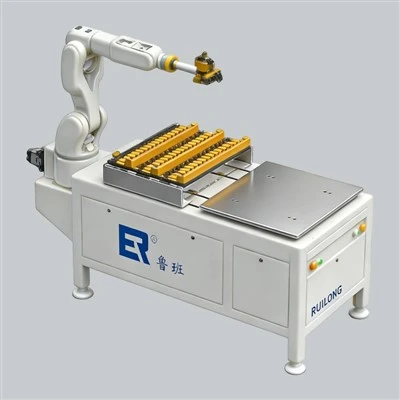


For modern, high-volume automated assembly lines, the core operational requirements are continuity, stability, and high efficiency; even minor issues with material supply can directly impact the line's throughput and delivery performance. Traditional assembly workshops often rely on scattered plastic bins and simple metal racks for component storage, resulting in disorganized layouts and chaotic categorization. This approach not only demands significant manpower and resources for constant sorting, replenishing, and organizing but also introduces time lags in manual restocking, frequently leading to material shortages and production line downtime. Frequent start-stop cycles disrupt production rhythm, reduce assembly efficiency, and shorten equipment lifespan, ultimately limiting capacity and compromising product quality-making it impossible to meet the demands of high-volume, standardized mass production.
To address these specific pain points in automated assembly, the multi-layer storage system has undergone targeted optimization and upgrades. It employs an intelligent storage structure featuring independent tiers and segregated zones, completely revolutionizing traditional, haphazard storage methods. The system enables the categorized storage, intelligent retrieval, and automated feeding of diverse components across various specifications, ensuring a stable, round-the-clock supply of materials to the assembly line. It is perfectly suited for high-volume automated assembly lines producing electronics, hardware, automotive components, and home appliance parts. As a key component in the automation upgrade process, this multi-layer storage system effectively resolves industry challenges such as mixed materials, shortages, downtime, and low efficiency, providing a solid foundation for high-efficiency mass production.


I. Multi-material tiered storage to completely eliminate material mixing issues
Automated assembly involves a vast array of components with varying specifications and strict process requirements. Disorganized material storage easily leads to errors such as incorrect assembly, omissions, or mixed parts, directly resulting in assembly defects, rework, and scrap, thereby increasing production costs. The multi-layer storage system utilizes an independent, tiered isolation design where each storage level is partitioned to prevent interference. This allows for the precise, segregated storage of assembly parts, semi-finished goods, and auxiliary materials based on specifications, process stages, and categories. Integrated with the production line control system, the equipment precisely retrieves materials from the corresponding slots based on real-time assembly steps and production schedules. Working in tandem with robots for accurate picking, it fundamentally eliminates issues regarding mixed, incorrect, or missing materials, significantly lowering defect and scrap rates while enhancing overall product quality.
II. High-capacity buffering to meet mass production demands
Large-scale assembly lines require high daily output and maintain a tight production pace, placing extreme demands on the continuity of material supply. Traditional manual replenishment methods necessitate frequent line stoppages, which not only disrupt the production rhythm but also result in significant capacity loss. Equipped with high-capacity, industrial-grade storage slots, the system enables massive material buffering; a single loading cycle supports prolonged, continuous assembly operations, thereby extending the replenishment interval and reducing the frequency of manual intervention. This stable, uninterrupted supply ensures a consistent production rhythm, prevents capacity fluctuations caused by material issues, guarantees the reliable and timely delivery of large-volume orders, and effectively boosts the enterprise's order fulfillment capabilities.
III. Seamless integration with automated robots for superior adaptability
The equipment features a universal interface design, ensuring perfect compatibility with various industrial assembly robots, including 4-axis, 6-axis, and SCARA models. It supports precise, multi-angle material picking and smooth feeding by the robots, delivering high retrieval accuracy and operational stability while eliminating the need for manual intervention throughout the material handling process. Whether for newly designed intelligent assembly lines or the intelligent and automated retrofitting of legacy lines, the system integrates rapidly without requiring structural modifications to the existing line. It offers exceptional compatibility, scalability, and ease of implementation, making it suitable for a wide range of standard and non-standard automated assembly projects.


IV. Vertical Structure Design Saves Workshop Space
Traditional flat-layout material racks and scattered parts bins consume significant floor space, leading to inefficient use of the facility-particularly for companies with limited room-and resulting in cluttered material placement that hinders 5S management. In contrast, the multi-layer storage unit utilizes a vertical, multi-tiered design that expands storage capacity upward. It achieves a storage capacity several times that of traditional racks within a minimal footprint, drastically reducing the floor area required for material storage. Furthermore, the equipment features a uniform, orderly layout that optimizes the overall workshop configuration and standardizes material management. This enhances the workshop's tidiness and standardization, supports the upgrade of 5S management practices, and significantly improves the utilization of facility resources.
In summary, for high-volume, standardized automated assembly projects, the multi-layer storage unit offers multiple core advantages-including categorized storage, high-capacity buffering, fully automated material feeding, high adaptability, and space efficiency. It comprehensively boosts production line automation, stabilizes output, and reduces costs associated with labor and material waste. As a highly practical and cost-effective standardized module for automation system integration, it is widely applicable to mass-production automated assembly scenarios across various industries.