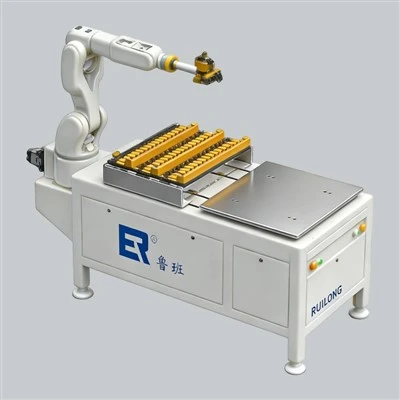

As industrial automation technologies continue to advance, robotic arms have become essential equipment for modern manufacturers seeking higher productivity and smarter production methods. With advantages such as high precision, efficiency, and operational stability, robotic arms help optimize manufacturing processes, improve product consistency, and support the transformation toward intelligent manufacturing.
One of the most significant advantages of industrial robotic arms is their excellent accuracy and repeatability. Through advanced control systems and precise motion mechanisms, robotic arms can perform programmed operations consistently over long periods of time. This capability makes them especially valuable in industries such as electronics manufacturing, precision assembly, and automotive components, where strict accuracy requirements are essential.
High efficiency and reliable operation are also major benefits of robotic automation. Robotic arms can continuously perform repetitive tasks such as material handling, assembly, inspection, packaging, and palletizing according to predefined production cycles. By reducing manual operations and maintaining stable performance during extended working hours, they help increase production capacity and improve overall manufacturing efficiency.
Another important advantage is their flexibility and adaptability. By modifying control programs, changing end-of-arm tooling, or adjusting operating parameters, robotic arms can quickly adapt to different products and manufacturing processes. This flexibility supports diverse production requirements, including multi-product manufacturing and customized automation solutions.
Robotic arms also improve workplace safety by taking over demanding, repetitive, or hazardous tasks that may expose workers to risks. Automated operations reduce human errors, enhance production reliability, and create safer working environments.
In addition, modern robotic arms offer strong integration capabilities. They can be connected with machine vision systems, automatic feeding equipment, conveyor systems, and industrial control platforms to achieve coordinated automation and intelligent production management. With the continued development of artificial intelligence, machine vision, and Industrial Internet technologies, robotic arms will play an increasingly important role in smart factories and continue driving the digital transformation of the manufacturing industry.