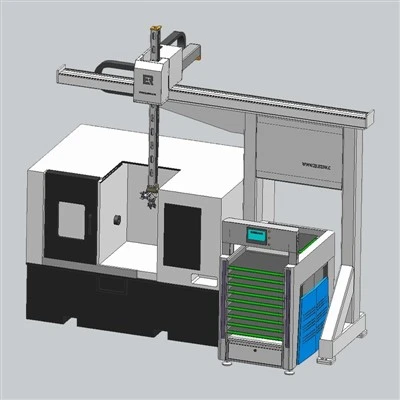


As a supplier of Track - Switching RGVs, I understand the paramount importance of safety in the operation of these automated vehicles. Track - Switching RGVs play a crucial role in various industrial applications, such as material handling in warehouses, logistics centers, and manufacturing plants. However, the complexity of track - switching operations presents potential safety risks that need to be carefully addressed. In this blog, I will share some effective strategies to improve the safety of Track - Switching RGV's track switching.
1. Advanced Sensory Systems
One of the most fundamental steps to enhance safety is the integration of advanced sensory systems. These sensors act as the "eyes" and "ears" of the RGV, enabling it to detect potential obstacles, other vehicles, and changes in the track environment.
-
Collision Detection Sensors: Installing multiple types of collision - detection sensors is essential. Ultrasonic sensors can detect obstacles in the proximity of the RGV, especially those at close range. Laser scanners, on the other hand, provide a more comprehensive view of the surrounding area. They can create a detailed map of the environment, allowing the RGV to accurately identify objects and their distances. For example, if there is a pallet that has fallen on the track, the laser scanner can quickly detect it and send a signal to the RGV to stop or change its route.
-
Track Condition Sensors: Track - related problems can also pose significant safety hazards. Sensors can be used to monitor the condition of the tracks, such as the presence of loose rails, damaged switches, or abnormal vibrations. By continuously monitoring the track conditions, the RGV can be programmed to slow down or stop when it detects a potential track issue, preventing derailment or other accidents.
2. Redundant Control Systems
Redundancy is a key principle in safety engineering. In the case of Track - Switching RGVs, redundant control systems can provide an extra layer of protection.
-
Dual - CPU Control: Instead of relying on a single central processing unit (CPU) to control the RGV, a dual - CPU system can be implemented. The two CPUs work in parallel, constantly monitoring each other's operations. If one CPU fails, the other can immediately take over, ensuring that the RGV can still operate safely. This reduces the risk of a complete system failure during track - switching operations.
-
Backup Power Supply: A reliable power supply is crucial for the safe operation of the RGV. In addition to the main power source, a backup power supply, such as an uninterruptible power supply (UPS), should be installed. In the event of a power outage, the UPS can provide enough power for the RGV to safely complete its current operation or move to a safe location.
3. Comprehensive Software Algorithms
The software that controls the Track - Switching RGV is the brain behind its operations. Well - designed software algorithms can significantly improve safety.
-
Route Planning and Optimization: The software should be able to plan the optimal route for the RGV based on the current track layout, the location of other vehicles, and the task requirements. It should also be able to dynamically adjust the route in case of unexpected events, such as a blocked track. For example, if a section of the track is under maintenance, the software can quickly find an alternative route for the RGV to reach its destination safely.
-
Interlock and Safety Logic: Interlock systems and safety logic are essential to prevent dangerous operations. For example, the software should ensure that the RGV cannot enter a track that is already occupied by another vehicle. It should also enforce safety procedures during track - switching, such as ensuring that the switch is fully aligned before the RGV moves onto the new track.
4. Operator Training and Monitoring
Even with the most advanced technology, human operators still play an important role in ensuring the safety of Track - Switching RGVs.
-
Operator Training: Thorough training programs should be provided to all operators who are responsible for the operation and maintenance of the RGVs. The training should cover everything from basic RGV operation to emergency response procedures. Operators should be familiar with the functions of the RGV's safety systems and know how to troubleshoot common problems.

-
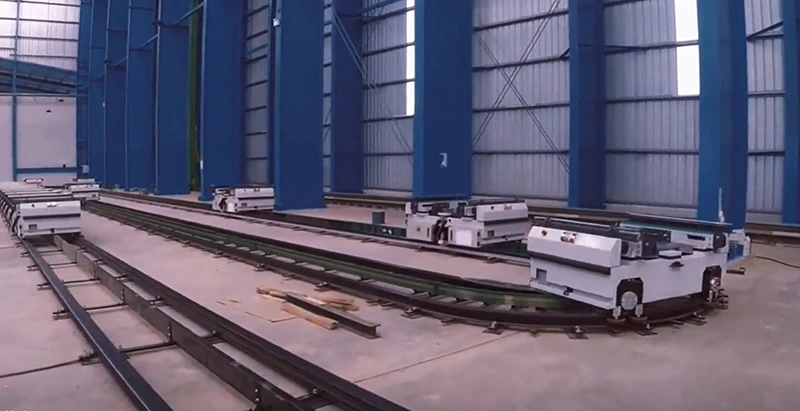
Remote Monitoring: Remote monitoring systems can allow supervisors to keep an eye on the RGV's operations in real - time. They can monitor the RGV's speed, location, and the status of its safety systems. If any abnormal conditions are detected, supervisors can immediately take appropriate action, such as sending a warning to the operator or remotely controlling the RGV to stop.
5. Regular Maintenance and Inspections
Regular maintenance and inspections are essential to keep the Track - Switching RGVs in good working condition.
-
Scheduled Maintenance: A detailed maintenance schedule should be established for each RGV. This should include tasks such as lubrication of moving parts, inspection of electrical connections, and calibration of sensors. By performing regular maintenance, potential problems can be detected and fixed before they lead to safety issues.
-
Pre - operation Inspections: Before each operation, a pre - operation inspection should be carried out. Operators should check the RGV's overall condition, including the track, the switches, and the safety systems. Any issues found during the inspection should be addressed immediately.
Our Product Offerings
As a leading supplier of automation solutions, we offer a wide range of RGVs and AGVs to meet different customer needs. In addition to Track - Switching RGV, we also provide Single - Rail RGV, QR Code - Guided AGV, Loop - Track RGV, and Laser Reflector - Guided AGV. All our products are designed with the highest safety standards in mind, incorporating the latest technologies and features to ensure reliable and safe operation.
Contact Us for Procurement
If you are interested in improving the safety of your material handling operations or are looking for high - quality Track - Switching RGVs, we are here to help. Our team of experts can provide you with customized solutions based on your specific requirements. Contact us today to start a procurement discussion and take the first step towards a safer and more efficient material handling system.
References
[1] Smith, J. (2020). Safety Considerations in Automated Guided Vehicle Systems. Journal of Industrial Automation, 15(2), 45 - 52.
[2] Johnson, A. (2019). Advanced Sensory Technologies for Improving the Safety of RGVs. Proceedings of the International Conference on Material Handling, 34 - 41.
[3] Brown, C. (2021). Redundancy in Control Systems for Automated Vehicles. Automation Engineering Review, 22(3), 67 - 74.